
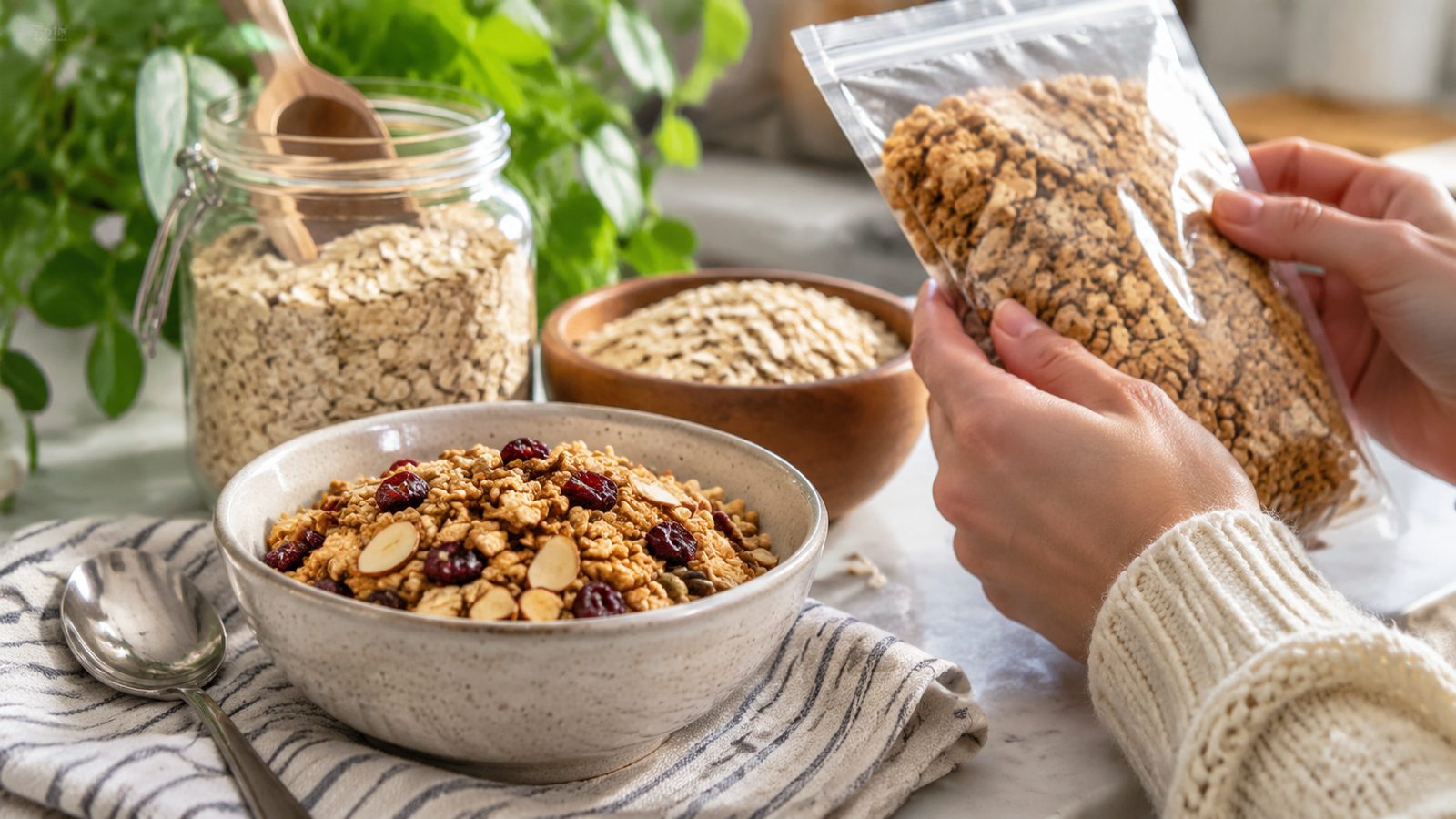
Granola can be gluten-free, but you should not assume every bag is safe. Does granola have gluten? The answer depends on its oats, added ingredients, and manufacturing process. People with celiac disease should look for products specifically labeled gluten-free. Quick answer: Many traditional varieties use oats, which do not naturally contain gluten. However, regular oats can contact wheat, barley, or rye during growing and processing. Some recipes also contain malt or wheat-based ingredients. Choose a product labeled gluten-free when avoiding gluten for medical reasons.
Granola and Gluten at a Glance
| Question | Quick answer |
|---|---|
| Are oats naturally gluten-free? | Yes, pure uncontaminated oats do not naturally contain gluten. |
| Can regular oat products contain gluten? | Yes, cross-contact with wheat, barley, or rye can occur. |
| Can recipes contain gluten ingredients? | Yes, some include wheat, barley, malt, or other gluten sources. |
| What should U.S. shoppers look for? | A clear “gluten-free” claim on the package. |
| What does “gluten-free” mean in the U.S.? | FDA rules require unavoidable gluten to remain below 20 ppm. |
| Should people with celiac disease be cautious? | Yes, gluten-free labeling is especially important for oat-based foods. |
The main distinction is between naturally gluten-free ingredients and a safe finished product. Oats themselves are not classified as gluten-containing grains under U.S. rules. Their processing history can still create a problem for sensitive consumers.
Does Granola Have Gluten? The Short Answer
Some products contain gluten, while others meet gluten-free standards. Regular oats are one common concern because they may encounter gluten-containing grains. Recipes can also include ingredients that introduce gluten directly. A package labeled gluten-free offers more useful information than an ingredient list alone. Under FDA gluten-free labeling rules, foods using that claim must meet specific requirements, and any unavoidable gluten must remain below 20 parts per million. That rule matters because a recipe can appear safe at first glance. Nuts, seeds, dried fruit, honey, and many common additions are naturally gluten-free. The oats and less obvious flavoring ingredients deserve closer attention.
Why Oats Can Be Confusing
Pure oats do not naturally contain the gluten proteins found in wheat, rye, and barley. The Celiac Disease Foundation explains that contamination can occur during growing, transportation, or processing. That history makes ordinary oat products a concern for people following strict gluten-free diets. Fields and processing equipment may handle several grains during production. Small amounts of wheat, barley, or rye can therefore enter an oat supply. A recipe made from those oats can inherit that cross-contact risk. FDA rules do allow oats in foods labeled gluten-free. They do not require those oats to carry third-party certification. The final food must still meet the federal gluten-free requirements. Some people with celiac disease also react to avenin, an oat protein. The Celiac Disease Foundation says most people with celiac disease tolerate moderate amounts of uncontaminated oats. Anyone who experiences symptoms should discuss oat consumption with a qualified clinician or dietitian.
Ingredients That Can Add Gluten
Oats are not the only ingredient worth checking. Recipes vary widely between brands and flavors. A product can include an obvious or less familiar gluten source. Watch ingredient lists for these items.
* Wheat or wheat flour * Wheat germ or wheat flakes * Barley or barley flakes * Rye * Spelt * Malt or malt flavoring derived from barley * Cereal clusters containing wheat * Cookie pieces or similar baked mix-ins
The Celiac Disease Foundation lists cereal and oat-based products among foods requiring careful verification. It specifically notes that many conventional oat products are not made with gluten-free oats. Malt ingredients are another reason to read beyond the front package design. Flavor variations deserve separate checks, even within the same brand. One flavor may use simple nuts and fruit. Another may add cookies, cereal pieces, or malt-based flavoring.
How to Read a Granola Label in the United States
Start by looking for the words “gluten-free” on the package. FDA regulations give that phrase a defined meaning in the United States. Equivalent claims include “no gluten,” “free of gluten,” and “without gluten.” A qualifying packaged food must contain less than 20 ppm of unavoidable gluten. It also cannot intentionally use unprocessed gluten-containing grains under the gluten-free claim. Manufacturers remain responsible for making truthful and compliant claims. Next, review the ingredient list for wheat, barley, rye, malt, and similar ingredients. Do not rely on phrases such as “made without gluten ingredients” alone. FDA notes that such wording does not automatically mean the product satisfies every gluten-free labeling requirement. You may also see a third-party certification logo. Certification can provide another layer of verification, but federal law does not require it. FDA does not endorse one specific certification organization over another.
Gluten-Free Label vs. Certified Gluten-Free
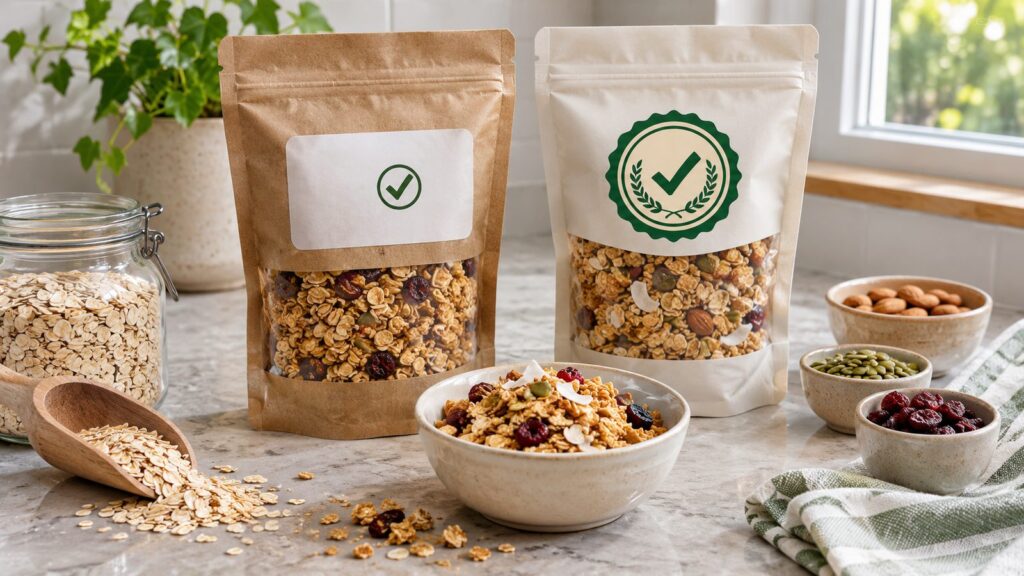
These phrases can look interchangeable, but they describe different forms of assurance. A U.S. gluten-free claim must follow FDA requirements. Certification comes from an independent organization using its own program standards. FDA does not require manufacturers to obtain third-party certification before using the federal claim. It also does not require routine testing in every case. Companies are still responsible for ensuring their labeled products comply with the regulation. For shoppers with celiac disease, certification may provide extra confidence. A standard gluten-free label can still be meaningful under U.S. law. Your medical needs should guide how cautious you choose to be.
What About Homemade Versions?
Making your own oat mixture gives you more control over every ingredient. Start with oats clearly labeled gluten-free if strict avoidance matters. Then choose nuts, seeds, spices, dried fruit, and sweeteners without questionable additions. Cross-contact can also happen in a home kitchen. Shared flour containers, baking sheets, utensils, and storage bins may carry crumbs or flour dust. Clean equipment and separate ingredients can reduce that risk. Homemade preparation does not automatically make a recipe safe. Ingredient sourcing still matters. This is especially true when cooking for someone diagnosed with celiac disease. For more food-related reading, browse the WriteOrTell Food section. WriteOrTell Food section The site also maintains broader health information for readers comparing dietary and wellness topics. WriteOrTell Health section
Can Someone With Celiac Disease Eat It?
Yes, many people with celiac disease can eat products made with suitable gluten-free oats. The package should clearly state that the finished food is gluten-free. Ordinary oat-based cereal should not be treated as automatically safe. Most people with celiac disease can tolerate pure, uncontaminated oats in moderate quantities. A smaller group may react to avenin despite avoiding wheat, barley, and rye. Personal medical guidance is useful if symptoms continue after switching to verified products. People newly diagnosed with celiac disease may need more individualized advice. A gastroenterologist or registered dietitian can help determine whether oats fit their diet. Online guidance should not replace care tailored to a diagnosed condition.
What About Granola Bars?
Bars require the same careful label reading. Their ingredient lists may be more complicated because binders, coatings, cereal pieces, and flavorings are common. Some bars also use ordinary oats rather than verified gluten-free oats. The Celiac Disease Foundation specifically lists energy and granola bars among foods requiring verification. Some contain wheat directly, while others use oats that are not gluten-free. Checking the exact product matters more than relying on the category name. Even products from one manufacturer can differ by flavor. Recheck the package when buying a new variety. Recipes and manufacturing practices can also change over time.
A Simple Shopping Checklist
Use a short routine before placing an oat-based cereal in your cart:
1. Look for a clear gluten-free statement. 2. Read the full ingredient list. 3. Check for wheat, barley, rye, spelt, and malt. 4. Do not assume ordinary oats are suitable for celiac disease. 5. Check each flavor separately. 6. Contact the manufacturer when labeling remains unclear.
FDA recommends contacting the manufacturer or checking its website when shoppers remain unsure about ingredients. That can help clarify sourcing or manufacturing practices. It is more reliable than guessing from package appearance. This process takes little time once you know what to look for. The gluten-free claim should be your first checkpoint. The ingredient list then helps identify obvious sources that need further attention.
Frequently Asked Questions
Does granola have gluten if it is made with oats?
Not necessarily, because pure oats do not naturally contain gluten. Conventional oats can still experience cross-contact with wheat, barley, or rye. Choose a gluten-free-labeled product when strict avoidance is necessary.
Are Quaker oats or other regular oats automatically gluten-free?
No. Ordinary oat products should not be assumed safe solely because oats are naturally gluten-free. Processing and agricultural cross-contact can introduce gluten-containing grains. Check the specific package for a gluten-free claim rather than relying on the brand name.
Is all oat-based cereal safe for celiac disease?
No, the finished product must be evaluated rather than the main grain alone. A gluten-free claim is the clearest U.S. labeling signal for packaged foods. Some people with celiac disease may also need individualized advice about oats.
Does malt contain gluten?
Most malt used in conventional foods comes from barley, which contains gluten. Malt flavoring can therefore make an otherwise oat-based recipe unsuitable. Always check the ingredient list when malt appears on a package.
Is gluten-free labeling mandatory?
No, manufacturers are not required to place a gluten-free claim on every naturally safe food. The claim is voluntary in the United States. Once a manufacturer uses it, the product must meet FDA requirements.
The Bottom Line
An oat-based breakfast mix is not automatically gluten-free or gluten-containing. Its safety depends on the oats, added ingredients, and potential cross-contact during production. A clear U.S. gluten-free claim provides the most useful starting point for shoppers. People avoiding gluten by preference can use the same label-reading approach. Anyone with celiac disease should be more careful because small exposures matter medically. Discuss persistent symptoms or questions about oats with a qualified healthcare professional. WriteOrTell readers can explore more nutrition and wellness topics through the site’s broader categories. Visit the WriteOrTell homepage You can also browse its lifestyle coverage for related everyday guides. WriteOrTell Lifestyle section. —