

The question “how much does it cost to change your name” has no single nationwide answer in the United States. For a standard adult court petition, a useful planning range is about $150 to $500, though some places charge much less, while others can exceed that range once additional expenses are included.
Your final bill depends on why you’re changing your legal name, where you live, and whether you need publication, certified copies, background checks, or professional help.
| Cost or step | What you may pay | What to know |
|---|---|---|
| Court filing | About $50 to $500 in many jurisdictions | Local court fees account for much of the variation. |
| California adult petition | $435 to $450 | California Courts lists this current filing range. Fee waivers may be available. |
| New York City Civil Court | $65 | The court lists a $65 filing fee for a name or sex-designation change. |
| Publication | $0 where it is not required; potentially hundreds where it is | Rules and exemptions differ by jurisdiction. |
| Certified court copies | Usually an additional charge | You may need copies for agencies and financial records. |
| Social Security card | $0 | Social Security name-change and replacement-card services are free. |
| U.S. passport | Sometimes $0; otherwise normal passport fees may apply | Timing and the type of passport request determine the fee. |
Quick answer: In the U.S., a straightforward adult court-ordered legal-name petition often costs about $150 to $500 before attorney fees. Filing is usually the largest charge. Publication, certified copies, fingerprints, and replacement identification can add to the total. A change tied to marriage or divorce may require far less court involvement.
Key Takeaways
- There is no national flat fee for changing a legal name.
- Your local court filing fee can range from tens of dollars to several hundred dollars.
- Publication and document-copy requirements can raise the total.
- Marriage and divorce documents may allow you to update records without filing a separate adult petition in some situations.
- Social Security name updates are free.
- A qualifying court fee waiver can reduce a large portion of the initial expense.
- Check with your local court before budgeting because fees and procedures can change.
How Much Does It Cost to Change Your Name in 2026?
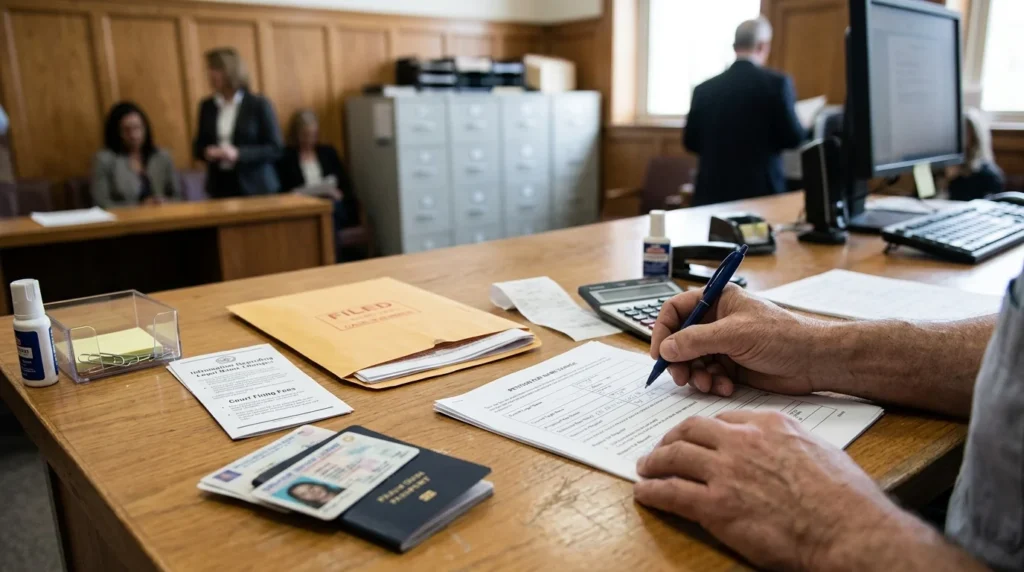
For budgeting purposes, $150 to $500 is a reasonable starting range for many uncomplicated, self-filed adult court petitions. Recent legal-cost guides use a similar range, but they also emphasize that location is the main variable.
A national average can still be misleading. The California Courts self-help page for adult name changes currently lists a filing fee of about $435 to $450. By contrast, New York City Civil Court lists a $65 fee for a name or sex-designation change. Those two official figures show why your county or state court matters more than a national estimate.
Start with the clerk’s office or the self-help page for the court that handles adult petitions where you live. Confirm the filing charge and required documents before paying for forms or outside services.
For more state-law explainers, you can also browse WriteOrTell’s Law section.
Court Filing Is Only Part of the Total
The petition fee starts the process, but it may not be the last bill you receive.
Depending on local law and your circumstances, other costs can include:
- Newspaper or legal-notice publication.
- Fingerprinting or a background check.
- Certified copies of the signed court order.
- Notarization.
- A new state identification card or driver’s license.
- Passport replacement or renewal.
- Professional document preparation.
- Attorney fees if you hire legal counsel.
Nolo places court filing fees in roughly the $50 to $500 range and notes separate expenses for publication, copies, background checks, and identification. Those items do not apply in every case.
Publication Can Make a Big Difference
Some courts require public notice before granting a petition, while others provide exemptions or follow different procedures. A newspaper notice can therefore turn a modest filing cost into a more expensive process. Do not pay a publication service until your court’s instructions confirm that you need one. The correct rule depends on the jurisdiction and, in some cases, the reason for the request.
Certified Copies Are Easy to Overlook
After the judge signs the order, you may want more than one certified copy. Government agencies, banks, employers, schools, insurers, and other institutions can have different documentation requirements. Ask the clerk what certified copies cost and whether you can order several at the same time. That small step can make your budget more realistic.
Is Changing Your Name After Marriage or Divorce Cheaper?
It often can be, because a marriage certificate, divorce decree, or other qualifying legal document may already provide evidence of the new name. The Social Security Administration accepts documents such as marriage records, divorce decrees, and court orders as evidence for qualifying changes. The exact documents required depend on the situation.
That does not mean every marriage-related or divorce-related request is automatic. State rules can limit which surname changes are covered by those documents. A person seeking a completely unrelated new name may still need to file a separate court petition. Before filing a new case, check whether the document you already have is sufficient for the agencies whose records you need to update. You could avoid an unnecessary filing fee.
What Does It Cost to Update Your Records Afterward?
Getting legal authority for a new name is only one part of the expense. You then need to update records held by government agencies and private organizations.
Social Security
A Social Security card correction is free. The SSA also warns consumers not to pay third parties for card-related services that the agency provides at no charge. The SSA says qualifying applicants may be able to start or complete a request online. When a replacement card is issued, it generally arrives by mail within five to ten business days after processing.
Passport
Passport charges depend heavily on timing. The U.S. Department of State says you can use Form DS-5504 for certain changes when both the passport and legal name change are less than one year old. There is no standard fee for that service unless you request expedited processing, which carries a $60 charge.
If more than one year has passed, normal renewal or application fees may apply. Check the State Department’s current instructions before submitting anything.
Driver’s License and State ID
State motor-vehicle agencies set their own fees and document requirements. Do not assume another state’s fee applies where you live. Once you have the required legal document, check your state agency’s current name-correction page. Include that amount when calculating the true cost of the process.
Can You Get a Court Fee Waiver?
Possibly. Courts may offer waivers to people who meet certain income or public-benefit requirements. California, for example, allows qualifying applicants to request a waiver of court fees based on public benefits, household income, or an inability to pay for both basic needs and court charges.
A waiver of the court filing fee does not necessarily eliminate all related expenses. Publication, certified copies, transportation, identification, or outside services may have separate rules. If the filing fee would prevent you from pursuing the case, look for “fee waiver,” “indigent filing,” or “in forma pauperis” information on your court’s official website before paying.
Do You Need a Lawyer?
Many straightforward, uncontested adult petitions can be handled without full attorney representation, depending on state procedures. Court self-help forms and instructions are available in many jurisdictions. Legal help becomes more useful when the case involves complications such as:
- An objection from another person.
- A minor child.
- Questions about parental rights.
- Criminal-history disclosure requirements.
- Immigration or citizenship documents.
- Efforts to change records across several jurisdictions.
- Uncertainty about whether a proposed change is legally permitted.
Attorney fees vary too much to treat any single national figure as reliable. Ask about the fee structure before hiring anyone. Find out whether the quoted amount covers preparation only, filing, hearings, or the entire matter.
For context on how legal services and professional fees can differ by matter, WriteOrTell also has a guide to working with a real estate attorney.
A Better Way to Estimate Your Own Budget
Instead of starting with a national average, build a local estimate. First, find your court’s current petition fee. Then confirm whether publication, fingerprints, a hearing, or certified copies are required. Add only the identification-document costs that apply to you.
For example, one person might pay a court fee and several copy charges. Another could face the filing fee, newspaper notice costs, fingerprinting fees, and charges for multiple replacement documents. A marriage-related update may involve no separate court petition at all. This approach gives you a more useful number than a single nationwide “average.” You should also budget for the time involved. Nolo notes that a court-based process can take roughly one to six months, although schedules differ widely by jurisdiction and case.
How to Keep the Cost Down
You cannot control every government fee, but you can avoid unnecessary spending.
- Use official court forms first. Many courts provide free forms and self-help instructions.
- Check for a fee waiver before filing. Do this before paying the clerk.
- Confirm publication rules. Do not buy a newspaper notice unless your case requires one.
- Order the certified copies you need together. Ask the clerk about pricing first.
- Use free government services directly. Social Security card services are free.
- Check passport timing. A qualifying update within one year may avoid the standard passport fee.
- Pay for legal help when the issue calls for it. Routine filing assistance and representation in a contested matter are different services.
If you are researching other legal documents affected by state-specific rules, WriteOrTell’s Lady Bird deed guide shows why checking the law where you live matters.
Check Your Local Court Before You Pay
A useful national budget is about $150 to $500 for many routine court-based adult name changes, but the number that matters is the one published by your local court. Check the filing fee, notice rules, fee-waiver options, and copy charges before submitting a petition. Then make a second list of the records you need to update. Social Security costs nothing, while passport and state ID fees depend on the circumstances.
Frequently Asked Questions
A self-filed U.S. adult petition often costs around $150 to $500, but local fees can fall well outside that range. California currently lists $435-$450 to file, while New York City Civil Court lists $65. Additional publication, copy, or identification costs may apply.
It is possible in limited circumstances. You may qualify for a court fee waiver, and certain marriage- or divorce-related updates may not require a separate petition. Social Security card updates are also free. Other document or administrative costs may still apply.
No. Marriage gives you a legal document that may support a qualifying surname update, but you still need to update your records with the relevant agencies. The options available under a marriage certificate also depend on applicable law.
A straightforward case may take weeks or several months. Nolo provides a broad estimate of roughly 1 to 6 months, but court schedules, notice requirements, background checks, and objections can affect the timeline.
Each agency has its own requirements. Start with the legal document that authorizes the new identity information, then follow the current instructions from the SSA, your state motor-vehicle agency, and the State Department. Do not rely on a third-party checklist when official instructions differ.