

A real estate attorney handles the legal side of property transactions, from reviewing contracts to resolving title problems and examining closing documents. You may need legal counsel because state rules require it or because your deal involves added legal risk. Even when hiring a lawyer is optional, independent legal advice can help protect your interests before you sign binding documents. Elsewhere on the site: Workplace Injury Lawyer.
| Topic | What to Know |
| Main role | Protect a client’s legal interests in a property matter |
| Common work | Contracts, title issues, deeds, closing documents, negotiations, and disputes |
| Who may hire one | Buyers, sellers, landlords, property owners, lenders, or investors |
| Required at closing? | It depends on state law and local practice |
| Common billing methods | Hourly rates or flat fees |
| Best time to call | Before signing a purchase agreement when legal questions already exist |
Quick takeaway: A property lawyer handles the legal rights and obligations involved in a purchase, sale, lease, financing arrangement, or property dispute. The lawyer may review contracts, identify title concerns, explain closing documents, negotiate terms, and represent one party’s interests. The exact role depends on local law and the circumstances of the transaction.
What Does a Real Estate Attorney Do?

Property transactions involve more than agreeing on a price and exchanging keys. Contracts establish deadlines, contingencies, remedies, disclosures, financing conditions, and each party’s responsibilities.
A lawyer’s work varies depending on the transaction. Common services include:
- Reviewing or drafting a purchase and sale agreement
- Explaining contract clauses and legal obligations
- Reviewing title records and helping resolve liens or ownership concerns
- Preparing or examining deeds and other transfer documents
- Advising on disputes, easements, zoning questions, or boundary problems
- Reviewing closing documents and helping address last-minute legal issues
A property lawyer may also verify ownership, help resolve title defects, prepare legal documents, and assist with closing.
For more property-related reading, browse WriteOrTell’s Real Estate section.
How Legal Counsel Helps Buyers and Sellers
For Buyers
A buyer needs to know that the contract reflects the deal they believe they are making. Legal counsel can review financing contingencies, inspection provisions, title conditions, closing deadlines, and remedies if the transaction falls through.
Title problems deserve special attention. A lien, ownership dispute, easement, or other recorded interest can affect what a buyer receives. A lawyer can explain the issue and what must happen before the purchase can proceed.
Buyers using mortgage financing also receive several important documents near closing. These documents should be reviewed carefully to make sure the loan terms, closing costs, and other details match what the buyer expects.
For Sellers
Sellers can face different risks. Their lawyer may review the sale agreement, help address title defects, examine disclosure obligations, prepare transfer documents, or respond to a buyer’s proposed contract changes.
Property condition can also affect negotiations and disclosure questions. Homeowners researching the physical side of ownership can explore WriteOrTell’s Home Improvement resources, including its detailed brick-staining guide, for related maintenance information.
When Should You Hire a Property Lawyer?
Legal advice becomes more valuable when a transaction moves beyond a routine purchase or sale.
| Situation | Why Legal Advice May Help |
| For-sale-by-owner transaction | No agent may be helping organize standard contract terms |
| Title defect or lien | Ownership may not transfer cleanly until the problem is resolved |
| Unusual contract clause | A provision may change your obligations or legal remedies |
| Commercial property | Leases, business entities, financing, and due diligence may be more complex |
| Estate, trust, or business ownership | The person signing may need clear authority to transfer the property |
| Boundary or easement dispute | The disagreement may affect ownership or property-use rights |
| Foreclosure or short sale | The transaction may involve additional legal and lender requirements |
You do not have to wait for a closing problem before seeking legal advice. In many cases, legal guidance is most useful before a buyer or seller becomes legally committed to an agreement.
That timing matters. Once a contract is signed, your options may be controlled by its deadlines, contingencies, and termination provisions.
Is a Lawyer Required at a Real Estate Closing?
There is no single nationwide rule requiring legal representation at every U.S. property closing. Requirements depend on state law and the specific functions being performed.
In some states, an attorney must participate in certain parts of a real estate transaction. In others, buyers and sellers may complete a closing without hiring their own lawyer.
The distinction between being present at closing and representing you is important. A lender, seller, title company, or another party may have its own lawyer or closing professional. That person does not automatically represent your interests.
Before relying on a general online list of “attorney states,” check the current rules in the state where the property is located. Local closing practices can also vary.
Readers interested in broader legal topics can also visit WriteOrTell’s Law section.
How Much Does a Property Lawyer Cost?
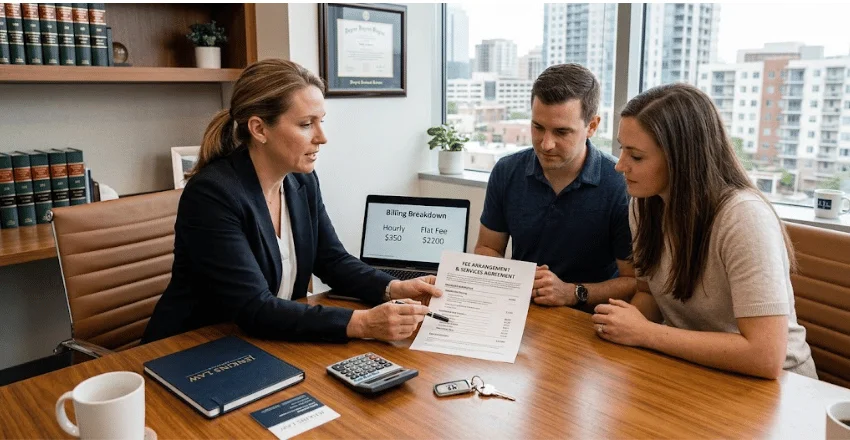
Fees depend on location, experience, the type of property, and the amount of work involved. Lawyers commonly charge either an hourly rate or a flat fee for clearly defined services.
For a standard residential transaction, legal fees may range from several hundred dollars to a few thousand dollars. More complicated matters, such as disputes, title problems, negotiations, or commercial transactions, can cost more. If you want to go deeper, read How Much Does It Cost to Change Your Name.
Treat any general price range as a reference point rather than a quote for your transaction.
| Fee Structure | Often Used For | What to Confirm |
| Hourly | Negotiations, disputes, and unusual legal work | Hourly rate and billing increments |
| Flat fee | Defined closing or document-review services | Exact services included |
| Retainer | Ongoing or potentially disputed matters | How unused funds and additional work are handled |
Ask for the fee arrangement in writing. Find out whether title work, recording costs, filing fees, consultations, or additional negotiations are included.
A lower quote is not automatically the better deal. Compare the scope of services before comparing prices.
Lawyer vs. Real Estate Agent vs. Title Company
These professionals can work on the same transaction, but their roles are different.
| Professional | Primary Role | Gives Legal Advice? |
| Property lawyer | Legal rights, contracts, title problems, documents, and disputes | Yes, for the client represented |
| Real estate agent | Property search, marketing, offers, and transaction coordination | Generally no |
| Title or settlement company | Title and settlement functions permitted under state law | Not independent legal counsel unless qualified and formally retained as such |
Real estate agents, escrow officers, closing agents, title companies, and lawyers may all participate in the same transaction. However, each has a different role.
The practical question is not simply, “Is a professional already involved?” Instead, ask, “Who is protecting my legal interests?”
How to Choose the Right Property Lawyer

Look for someone whose experience matches the type of transaction rather than choosing based on name recognition alone.
- Check licensing. Confirm that the lawyer is licensed to practice in the state where the property is located.
- Ask about relevant experience. Residential closings, commercial leases, title disputes, and litigation require different skills.
- Explain the facts before discussing price. A simple closing and a disputed title should not be treated as the same type of legal work.
- Request a written fee agreement. Ask what is included and what could result in additional charges.
- Ask who will handle the work. Find out whether you will work directly with the lawyer, an associate, or support staff.
- Discuss timing. Confirm how quickly contracts and closing documents can be reviewed.
Choosing a lawyer with experience in the specific type of transaction can make the process easier and reduce the chance that important legal issues will be overlooked.
What to Do Before Your Next Property Deal
Start by checking the rules in the state where the property is located. Then identify any issue that makes the transaction unusual, such as a title defect, private sale, ownership dispute, commercial use, or complicated contract term.
If legal questions exist, speak with a licensed property lawyer before signing documents that may limit your options. Bring the proposed contract, title information, relevant correspondence, and a short list of questions.
Preparing for the meeting can help you understand the legal work you need, the risks involved, and the fees you may be charged.
This article provides general educational information and does not constitute legal advice. Property and closing laws vary by jurisdiction.
Frequently Asked Questions
Not in every U.S. transaction. State law determines whether an attorney must be involved in specific closing functions. You may still choose independent legal counsel to review contracts or closing documents when representation is optional.
Ideally, contact one before signing a binding offer if you already have legal concerns. Legal advice is usually more useful before you become committed to the transaction than after a dispute develops.
You should not assume that the seller’s lawyer represents you. A lawyer generally represents the interests of the client who hired them. Ask clearly who each professional in the transaction represents.
No. Agents usually focus on finding or marketing property, preparing offers, negotiating business terms, and coordinating the transaction. Lawyers focus on legal rights, contracts, documents, and disputes. The two roles can complement each other.
Depending on the transaction, a lawyer may review the purchase agreement, deed, title documents, mortgage documents, disclosures, settlement statements, and other closing paperwork.