
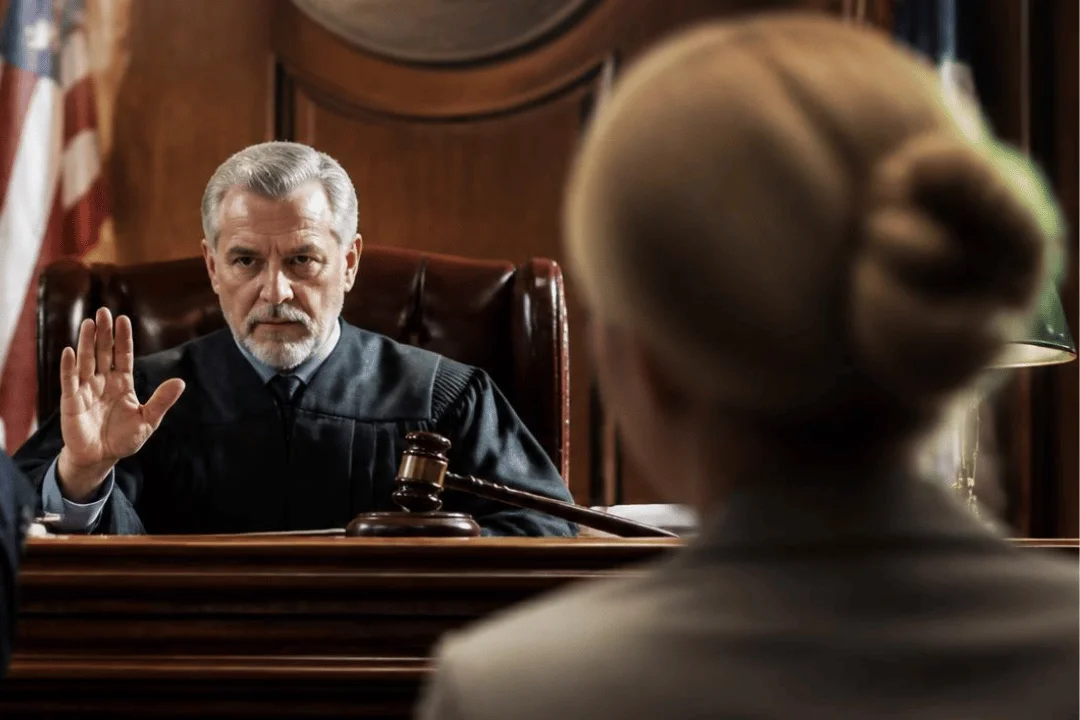
If you have watched a courtroom trial, you have probably heard an attorney raise a sudden objection. The judge often answers almost immediately with a single word: “sustained.” That short exchange determines whether a challenged question, answer, or piece of evidence can continue in the proceeding. Understanding what does sustained mean in court makes it much easier to follow what lawyers, witnesses, and judges are doing during a U.S. trial.
Quick answer: When a judge says “sustained” in a U.S. court, the judge agrees with the objection. The challenged question, testimony, or evidence cannot continue in its current form. A witness may be stopped from answering, an attorney may need to rephrase a question, or the judge may direct jurors to disregard material that should not be considered.
The basic courtroom meaning is straightforward, but what happens after the ruling depends on the reason for the objection and the rules that apply in that court. Federal and state courts can follow different evidence rules and procedures, so a ruling that seems similar in two cases may have different consequences. The important starting point is that “sustained” means the judge has accepted the objection that was just made.
What Does Sustained Mean in Court?
When a lawyer objects during a trial, the lawyer is asking the judge to decide whether a question, answer, document, photograph, statement, or other evidence should be allowed under the applicable rules. If the judge says “sustained,” the judge agrees with the lawyer who objected and stops the challenged material from proceeding in its current form. The attorney asking the question may then need to rephrase it, establish additional facts, use another method of introducing the evidence, or move to another subject.
A sustained ruling does not necessarily mean that the information being discussed is false. Judges are usually deciding whether the information may legally be presented or considered in that particular situation, rather than deciding whether every underlying factual statement is true. Admissibility depends on evidence rules, procedure, the purpose for which the information is offered, and the specific circumstances of the case.
For example, imagine an attorney asks a witness to repeat something another person said about an accident. The opposing attorney might object because the proposed testimony could raise a hearsay issue, depending on why the statement is being offered and whether an exception or exclusion applies. If the judge sustains the objection, the lawyer cannot simply ignore the ruling and have the witness answer the same improper question anyway.
Sustained vs. Overruled: What Is the Difference?
“Sustained” and “overruled” have opposite meanings when a judge rules on an objection. A sustained objection means the judge agrees with the lawyer who objected, while an overruled objection means the judge rejects that objection. The ruling determines whether the challenged question, testimony, or evidence may continue at that moment.
| Court ruling | What it means | What usually happens next |
|---|---|---|
| Sustained | The judge agrees with the objection. | The challenged question or evidence is stopped in its current form. |
| Overruled | The judge disagrees with the objection. | The witness may answer or the evidence may proceed |
| Stricken | Material already presented is removed from consideration. | The jury may be instructed not to consider it. |
Suppose an attorney asks a witness a question and opposing counsel objects that the question is improper. If the judge says “overruled,” the witness will usually be allowed to answer unless another issue arises. If the judge says “sustained,” the witness ordinarily should not answer that particular question as it was asked.
This distinction is one of the most useful things to understand when following a trial. “Sustained” favors the attorney who made that particular objection, while “overruled” favors the attorney whose question or evidence was challenged. Neither ruling, however, tells you who will ultimately win the case.
What Happens After an Objection Is Sustained?

What happens next depends largely on why the judge sustained the objection. Sometimes the problem is simply the wording or form of a question, meaning the attorney may be able to correct it immediately. In other situations, the underlying evidence may not be admissible for the purpose for which the lawyer attempted to introduce it.
Suppose an attorney asks an improperly leading question during direct examination. After the judge sustains the objection, the attorney may be able to ask a more open-ended question that does not suggest the desired answer. The witness can then respond to the properly phrased question if no other valid objection prevents it.
A lack-of-foundation objection can lead to a similar result. The attorney may need to establish who created a document, how a witness recognizes a photograph, or another preliminary fact before trying to introduce the evidence again. If the missing foundation is properly supplied, the attorney may sometimes renew the question or offer the exhibit again.
Readers exploring other types of U.S. court proceedings can browse WriteOrTell’s Law section for related explanations of legal processes and terminology. Those articles cover different legal issues, but they reinforce an important point: court procedures often depend on jurisdiction and the type of case involved. A general courtroom term should therefore be understood in context rather than treated as a complete explanation of a legal dispute.
What If the Witness Already Answered?
Courtroom exchanges happen quickly, and a witness may occasionally begin answering before the judge has ruled on an objection. When that happens, the objecting lawyer may ask the judge to strike the improper answer or other material from the record for purposes of the jury’s consideration. If the judge grants the request, jurors may be instructed not to use the stricken testimony when deciding the case.
A motion to strike is different from simply objecting before the answer is given. An objection can prevent information from being presented in the first place, while a motion to strike may address information that has already been stated. The precise procedure depends on the circumstances and the rules governing the court.
Jurors are expected to follow a judge’s instructions about evidence they may and may not consider. That does not mean they somehow erase the words from their memory, but legally they are directed not to rely on excluded or stricken material in reaching a verdict. This is one reason attorneys often try to make objections promptly when they believe a question will produce inadmissible evidence.
Common Reasons a Judge May Sustain an Objection
A judge does not sustain an objection merely because a lawyer dislikes a question or believes an answer could hurt the case. The objection generally needs a recognized basis under the evidence or procedural rules that govern the proceeding. Several objections appear frequently in American trials, although their precise application can vary.
| Common objection | Basic meaning |
|---|---|
| Hearsay | Certain out-of-court statements are offered to prove the truth of what they assert, subject to many exceptions and exclusions. |
| Relevance | The evidence does not sufficiently relate to a fact that matters to the case. |
| Leading | The question improperly suggests the answer, commonly an issue during direct examination. |
| Lack of foundation | Necessary preliminary facts have not yet been established. |
| Lack of personal knowledge | The witness lacks an adequate firsthand basis for the testimony. |
| Speculation | The question asks the witness to guess rather than testify from knowledge. |
| Asked and answered | A question has already been asked and answered. |
| Argumentative | The question functions more like an argument than a genuine request for testimony. |
These labels can make objections sound more automatic than they really are. For example, hearing that a statement was made outside the courtroom does not automatically mean it must be excluded, because hearsay law contains definitions, exclusions, and exceptions that depend on how the evidence is being used. A judge must consider the actual circumstances rather than simply reacting to a familiar objection word.
The same principle applies to leading questions. A question that might be improper during an ordinary direct examination may be acceptable during cross-examination or in another circumstance allowed by the applicable rules. Whether an objection should be sustained, therefore, depends on more than the label an attorney gives it.
Does Sustained Mean the Lawyer Won the Case?
No, a sustained objection does not mean that a lawyer has won the case. It only means the judge agreed with that particular objection at that particular moment in the proceeding. An attorney can have several objections sustained during a trial and still lose on the final verdict or judgment.
The opposite is also true when an objection is overruled. Losing one dispute about evidence does not automatically determine guilt, liability, damages, or any other ultimate issue before the court. Trials involve many pieces of evidence, legal rulings, witness credibility decisions, and factual questions before the outcome is reached.
For someone watching court for the first time, it helps to think of “sustained” as a ruling about a specific courtroom problem rather than a miniature verdict. The judge is resolving the objection that has just been raised, not necessarily expressing an opinion about which side should win. Keeping those two ideas separate makes trial proceedings much easier to understand.
Does a Sustained Objection Mean the Evidence Is Gone Forever?
Not always. If the judge sustains an objection because an attorney used the wrong form of question or failed to establish the necessary foundation, the lawyer may sometimes correct the problem and try again. A sustained objection can therefore stop the current attempt without permanently preventing every possible use of the information.
Consider a photograph an attorney wants to introduce as evidence. If the judge sustains a foundation objection because the attorney has not established what the photograph shows or how the witness recognizes it, the lawyer may ask additional questions and later offer the photograph again. Whether that second attempt succeeds depends on the applicable evidence rules and the facts established in court.
Other rulings are harder to cure. If evidence is inadmissible for a substantive reason that cannot be fixed by rephrasing a question or supplying preliminary facts, the judge may continue to exclude it. Lawyers must follow the court’s ruling rather than repeatedly presenting material in a way the judge has already prohibited.
Can a Sustained Objection Affect an Appeal?
Yes, an evidentiary ruling can become relevant on appeal, but a sustained objection does not automatically create a successful appeal issue. Appellate courts generally care not only about whether a trial judge made an error but also about whether the issue was properly preserved and whether the alleged error affected rights in a legally meaningful way. These preservation rules can be technical, which is why trial attorneys pay close attention to the record.
For excluded evidence in federal court, Federal Rule of Evidence 103(a)(2), as published by U.S. Courts, says a party claiming error generally must make the substance of the excluded evidence known to the court through an offer of proof unless its substance was already apparent from the context. That numbered rule matters because an appellate court may need to know what the excluded evidence would have shown before it can evaluate the claimed error. State courts can have their own preservation rules, so federal procedure should not automatically be assumed to govern a state case.
For an ordinary courtroom observer, the practical takeaway is simpler. A judge saying “sustained” controls what happens immediately in the trial, while preservation and appellate rules determine whether the ruling can later become part of a challenge to the proceedings. Those are related issues, but they are not the same legal question.
Is “Sustained” Used in Both Criminal and Civil Court?
Yes, judges rule on objections in both criminal and civil proceedings. The evidence being disputed may be very different, but the basic meaning of a sustained objection remains that the judge has agreed with the objection. The exact rules governing that ruling depend on whether the case is in federal or state court and on the type of proceeding involved.
A criminal trial might involve objections concerning witness statements, identification evidence, forensic evidence, photographs, prior conduct, or expert testimony. A civil case might involve contracts, medical records, business documents, property evidence, damages testimony, or expert opinions. In either setting, lawyers use objections to ask the judge to enforce the rules governing what may be presented.
Civil court procedures also arise in everyday legal matters outside traditional trial scenes. For example, WriteOrTell’s guide to legal name-change costs explains how court filing expenses and requirements can differ substantially across U.S. jurisdictions. That variation is another reason readers should avoid assuming that one court’s procedure automatically applies everywhere else.
What Does “Objection Sustained” Sound Like in a Real Courtroom?
A typical courtroom exchange can happen in only a few seconds. One attorney asks a question, the opposing attorney says “Objection” and may identify the legal ground, and the judge announces the ruling. Everyone is then expected to follow the judge’s direction before the examination continues.
For example, a lawyer might ask a witness what another person said about an accident. Opposing counsel could raise a hearsay objection, and the judge might respond, “Sustained.” The questioning attorney would then need to move on, rephrase the question, or establish a legally permissible basis for introducing the information.
Another example could involve a lawyer asking a witness to guess what another person intended. The opposing attorney might object that the question calls for speculation, and the judge could sustain that objection. The lawyer may still be able to ask the witness about events the witness personally saw, heard, or otherwise has a proper basis to describe.
Sustained Does Not Mean Guilty or Not Guilty
One common misunderstanding is that “sustained” reveals what the judge thinks about the defendant’s guilt in a criminal case. It does not mean the defendant is guilty, and it does not mean the defendant is not guilty. It generally tells the courtroom only how the judge has ruled on the specific objection currently before the court.
The same principle applies in civil litigation. A judge sustaining a plaintiff’s objection does not mean the plaintiff has proven negligence, breach of contract, damages, or another disputed claim. Likewise, sustaining a defendant’s objection does not mean the lawsuit will be dismissed or that the defendant will ultimately win.
Individual objection rulings can still matter because they influence which evidence reaches the judge or jury. Some evidence can have a major effect on how a case is presented, while other disputed questions are relatively minor. The final result, nevertheless, depends on the admissible evidence and governing law, not simply on which side had more objections sustained.
Can the Same Lawyer Object More Than Once?
Yes, an attorney can make multiple objections during the same witness examination when different questions raise legitimate issues. Each objection is considered in the context of the question, answer, evidence, and applicable rule involved. A prior sustained objection does not automatically mean the judge will sustain the next one.
Judges also have authority to manage proceedings and prevent unnecessary disruption. Repetitive, baseless, or improper objections can interfere with an orderly trial and may draw a response from the court. Lawyers therefore generally need a legitimate legal reason for each objection rather than objecting merely because testimony is unfavorable.
The number of objections can vary significantly from one trial to another. A complex case involving expert testimony or disputed documents may generate more evidentiary disputes than a straightforward proceeding. Counting sustained and overruled objections is therefore not a reliable way to decide which side is winning.
When Might Someone Need a Lawyer to Explain a Court Ruling?
People representing themselves may understand the basic meaning of “sustained” while still being unsure what they are allowed to do next. The difficult part is often not the word itself but the evidence rule, procedural requirement, or strategy behind the judge’s ruling. A lawyer familiar with the relevant court can explain whether a question can be rephrased, whether additional foundation is needed, or whether the evidence is likely to remain excluded.
The need for legal help depends on the stakes and complexity of the matter. Someone involved in a contested trial, a significant property dispute, or another proceeding affecting important legal rights may need individualized advice rather than a general definition found online. Court staff and self-help resources may provide procedural information, but they generally cannot replace personalized legal advice.
Legal representation can also serve different purposes depending on the type of case. Readers dealing with property transactions or disputes can see WriteOrTell’s real estate attorney guide for an explanation of what those lawyers typically handle and when professional legal help may be useful. A courtroom evidence issue may require a different type of attorney, so the lawyer’s experience should match the legal matter involved.
Frequently Asked Questions
What does “sustained” mean in court in simple terms?
Sustained means the judge agrees with an objection that a lawyer has made. The challenged question, testimony, or evidence cannot continue in its current form. Depending on the reason for the ruling, the attorney may sometimes correct the problem and try again.
What does “overruled” mean in court?
Overruled means the judge disagrees with the objection. The challenged question may generally be answered, or the evidence may continue if no other legal problem prevents it. In ordinary courtroom usage, “overruled” is therefore the opposite of “sustained.”
Does “sustained” mean the witness does not have to answer?
Usually, when the judge sustains an objection before the witness answers, the witness should not answer that particular question. The lawyer may sometimes be able to rephrase the question or establish additional facts before asking another version. Exactly what happens next depends on why the objection was sustained.
What happens if a witness answers before the judge says sustained?
The objecting attorney may ask the judge to strike the answer when appropriate. If the judge orders testimony stricken, jurors may be instructed not to consider it when reaching their decision. The exact procedure depends on the evidence rules and circumstances of the proceeding.
Is a sustained objection good or bad?
A sustained objection is favorable to the lawyer who made that particular objection because the judge agreed with the challenge. It does not mean that the lawyer has won the trial or that the other side’s entire case is weak. Both sides may have objections sustained and overruled during the same proceeding.
Can a lawyer ask the question again after an objection is sustained?
Sometimes the lawyer can rephrase the question, establish a missing foundation, or approach the subject through another legally permitted method. In other situations, the information itself may remain inadmissible for the purpose for which it was offered. The reason for the judge’s ruling determines whether another attempt is appropriate.
Does “sustained” mean the evidence is false?
No, sustaining an objection does not normally amount to a finding that the evidence is false. The ruling generally concerns whether the question or evidence is permissible under courtroom rules in that particular context. Evidence can be excluded for procedural or evidentiary reasons even when the judge has made no finding about whether the underlying information is true.
Can a judge sustain an objection without explaining why?
Yes, judges may sometimes simply say “sustained” after the basis for the objection is already clear from the attorneys’ statements and the context. In more complicated situations, the judge may hear arguments or explain the ruling in greater detail. How much explanation is provided depends on the issue and the way the court manages the proceeding.
The Bottom Line
So, what does “sustained” mean in court? It means the judge agrees with an objection and stops the challenged question, testimony, or evidence from proceeding in its current form. If the judge instead says “overruled,” the objection has been rejected, and the challenged material may generally continue.
A sustained objection does not mean someone has won the lawsuit, proven a criminal charge, or persuaded the judge about the entire case. It is a ruling made about a specific evidentiary or procedural issue at a particular point in the proceeding. Once you understand that distinction, courtroom exchanges involving “objection,” “sustained,” “overruled,” and “stricken” become much easier to follow.