
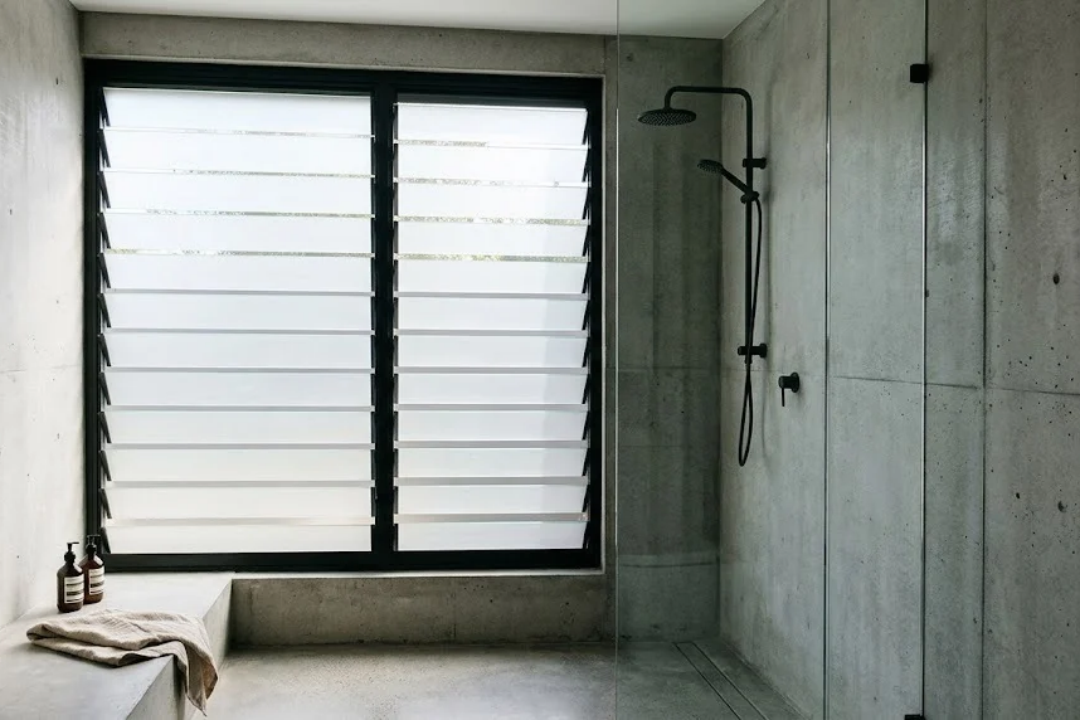
Jalousie windows use horizontal slats that tilt together to control ventilation through a window opening. They remain useful in warm climates and spaces where airflow matters more than insulation. However, their loose seals make them a poor choice for many air-conditioned or heated U.S. homes.
Quick answer: A jalousie window uses overlapping glass, acrylic, or other slats connected to a crank-operated mechanism. Opening the slats creates airflow across nearly the entire window area. The design works best in mild climates, porches, and naturally ventilated spaces, but it usually trails modern windows in insulation and security.
Jalousie Window Facts at a Glance
| Feature | What to Know |
|---|---|
| Common name | Louver or louvered window |
| Main design | Horizontal adjustable slats |
| Typical operation | Hand crank or lever |
| Biggest advantage | Excellent natural ventilation |
| Main drawback | Poor air sealing |
| Best locations | Mild climates, porches, sunrooms, utility areas |
| Typical 2026 installed cost | About $175–$375 per window |
| Common alternatives | Awning, casement, sliding, and double-hung windows |
| Best for conditioned living spaces? | Usually no |
Current replacement estimates commonly fall between $175 and $375 per installed window. Actual costs vary with size, material, availability, and local labor rates. Specialty products or difficult installations can increase the final project price.
Key Takeaways
- The slatted design can ventilate almost the full window opening.
- Angled blades can provide airflow during light rain.
- Closed slats usually cannot match modern compression seals.
- Older models can create security concerns because individual blades may be removable.
- Warm, mild climates offer the strongest use case.
- Casement and awning designs usually provide better sealing for conditioned rooms.
What Is a Jalousie Window?
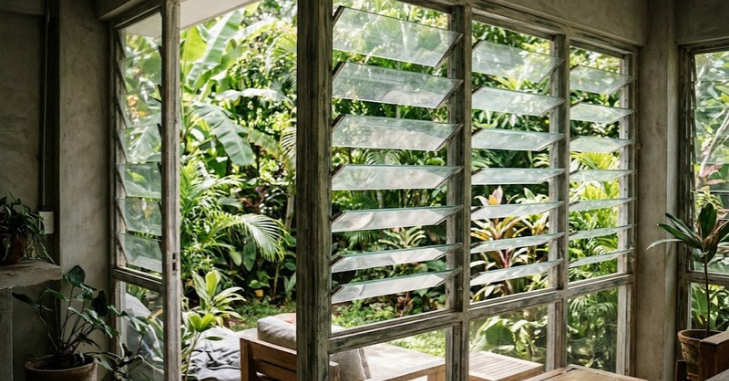
A jalousie window contains several parallel slats mounted inside a frame. The slats usually consist of glass, although other materials are available. A crank connects them so they can tilt open or closed together.
When closed, the blades overlap in a pattern similar to roof shingles. Turning the operator changes each blade’s angle at the same time. Opening them creates multiple horizontal passages for outside air to enter the room.
This construction became closely associated with mid-century homes in warm parts of the United States. Florida, Hawaii, and other mild regions were especially suitable for the design. Natural ventilation mattered more before residential air conditioning became widespread.
How Does the Design Work?
Each blade sits in clips connected to a shared operating mechanism. Turning the crank moves a connecting bar, which rotates the blades together. You can partly open the unit or move the blades toward a wider angle.
Air can enter through most of the opening when the blades are fully tilted. That differs from many sliding windows, where one sash blocks part of the opening. This broad ventilation area is the design’s most useful feature.
The downward blade angle also helps redirect light rain. You may keep the opening partly ventilated without immediately exposing the room to falling water. Heavy wind-driven rain can still enter through gaps between the blades.
Pros and Cons of Jalousie Windows
The design offers meaningful benefits when natural ventilation is the main priority. Its weaknesses become more important when heating, cooling, security, or storm resistance matters. Understanding that trade-off helps prevent an expensive mismatch.
| Factor | Advantages | Drawbacks |
|---|---|---|
| Ventilation | Opens across most of the window area | Outdoor air enters easily when open |
| Rain protection | Angled slats resist some light rain | Wind-driven rain can pass through |
| Energy performance | Natural airflow may reduce AC use in mild weather | Closed blades allow more air leakage |
| Maintenance | Individual damaged blades can be replaced | Cranks and metal parts can wear or corrode |
| Security | Modern accessories may improve protection | Older removable blades can create weak points |
| Style | Fits tropical and mid-century architecture | Appearance may not suit every home |
Strong Natural Ventilation
Ventilation is the clearest reason to keep or install this window style. The entire stack of blades can open rather than exposing only one section. That feature can create noticeable cross-ventilation when windows face prevailing breezes.
This advantage has the greatest value in mild or tropical conditions. A screened porch, sunroom, or unconditioned room may benefit from constant airflow. The same airflow becomes a disadvantage inside tightly conditioned living areas.
Useful Airflow During Light Rain
The overlapping blades point downward when partly open. That orientation can shed ordinary rainfall while allowing some breeze through the opening. It offers an advantage over windows that must remain completely closed during rain.
The protection has limits during storms or strong winds. Water can pass between gaps when rain moves horizontally. Homes in severe weather areas should also consider local impact and wind requirements.
Poor Air Sealing
Energy performance remains the biggest weakness of the traditional design. Numerous blade edges create more potential leakage points than a tightly compressed sash. Older federal housing guidance identified jalousie designs as difficult to weatherstrip effectively.
That leakage matters when a furnace or air conditioner is running. Conditioned indoor air can escape while outside temperatures and humidity enter. Modern casement and awning windows generally form tighter perimeter seals when closed.
Security Concerns
Traditional models can present another problem at easily reached openings. Some older glass blades can be removed or manipulated from outside. That design can provide an intruder with access to the operating mechanism.
Security screens or other barriers may reduce that weakness. Any barrier near a required emergency escape opening needs careful planning. Homeowners should follow applicable building and fire-safety requirements.
Are They Energy Efficient?
Traditional louvered units are generally poor performers compared with modern sealed window systems. Their numerous overlapping blades make airtight closure difficult. That weakness can increase unwanted heat transfer through air infiltration.
A historical Florida energy guide also warned about substantial air leakage from this design. It did not recommend the style for heated or air-conditioned buildings. Newer products may improve hardware and sealing, but the basic geometry still creates challenges.
Climate should therefore drive the decision. Natural ventilation can be useful in Hawaii or similar mild conditions. A tightly conditioned home in a colder or mixed climate usually benefits more from another design.
How Much Do They Cost in 2026?
Modernize reports an average installed replacement range of about $175 to $375 per opening. Local labor, window dimensions, material choices, and product availability affect that figure. Specialty construction or repairs around the opening can increase costs further.
Another current homeowner guide places standard units around $170 to $380. Those figures are useful starting points rather than guaranteed contractor quotes. Regional pricing can differ considerably across the United States.
You should also consider operating costs rather than comparing purchase prices alone. A cheap window may cost more over time if conditioned air constantly escapes. Energy performance becomes especially important in regions with long heating or cooling seasons.
Where Do They Still Make Sense?
A screened porch is one of the strongest locations for this design. Maximum ventilation can matter more than tight insulation in that setting. The retro appearance can also complement mid-century architecture.
Sunrooms can be another good application when they are not conditioned year-round. Garages, workshops, utility areas, and similar spaces may also benefit. These locations reduce the financial penalty associated with air leakage.
Warm climates provide the strongest residential case. Light winter heating demands make weaker insulation less costly. Even then, storm exposure, security, insects, and local construction rules need consideration.
Jalousie vs. Awning, Casement, and Sliding Windows
Modern alternatives solve several problems associated with the traditional slatted design. The right replacement depends on ventilation, weather, budget, and opening dimensions. No single window type is ideal for every house.
| Window Type | Ventilation | Air Sealing | Rain Protection When Open | Security |
|---|---|---|---|---|
| Jalousie | Excellent | Poor | Good in light rain | Lower on many older designs |
| Awning | Good | Strong | Good | Stronger |
| Casement | Excellent | Strong | Moderate | Stronger |
| Sliding | Moderate | Moderate | Limited | Moderate to strong |
Awning windows are a practical alternative when rain-friendly ventilation matters. Their single sash closes against a perimeter seal rather than multiple overlapping blades. That structure generally provides better resistance to drafts.
Casement windows are another strong replacement choice. They can open widely and capture breezes while sealing firmly when closed. They work especially well where year-round energy performance matters.
Sliding units may suit openings where outward projection is undesirable. They are widely available and familiar to most installers. Their ventilation area is usually smaller because one sash remains in front of another.
Should You Repair or Replace an Existing Unit?
Repair can make sense when the problem involves one broken blade or a replaceable operator. Maintaining original windows can also matter in architecturally significant mid-century properties, and, as with staining brick, restoring exterior features rewards careful planning. Small repairs may preserve the character without replacing the entire assembly.
Replacement becomes more attractive when several problems occur together. Persistent drafts, corrosion, broken operators, loose blades, and water intrusion can indicate wider deterioration. Rising heating or cooling demands can strengthen the case for replacement.
Consider the room before choosing. An original unit on an unconditioned porch may remain useful for decades. The same deteriorated window in a bedroom may deserve a tighter and more secure replacement.
How to Maintain an Older Jalousie Window
Routine cleaning prevents dirt from collecting along individual glass edges and clips. Wipe each blade carefully and inspect it for chips or cracks. Avoid forcing a crank that has become difficult to turn.
Check the operator, connecting bar, clips, and frame for looseness or corrosion. Light lubrication may help appropriate moving parts when the manufacturer allows it. Damaged hardware should match the original mechanism correctly.
Also inspect the closed blades for obvious gaps or poor alignment. Misaligned glass can increase drafts and water penetration. Worn seals or clips should be replaced when suitable parts remain available.
Are They a Good Choice for U.S. Homes Today?
For most conditioned U.S. living spaces, tighter modern windows offer a better balance of comfort and security. This is especially true in cold, mixed, or heavily air-conditioned climates. Awning and casement designs preserve good ventilation while improving closure performance.
The older style still has a legitimate niche. Mild climates, porches, retro renovations, and naturally ventilated spaces can benefit from its unusually broad airflow. The deciding factor should be the room’s performance needs rather than appearance alone.
Before buying or replacing anything, check local building requirements, including any real estate attorney guidance on permits or sale disclosures, and compare several window types. Ask installers about air leakage, storm ratings, screens, security, warranties, and replacement-part availability. Those questions provide a more useful comparison than upfront price alone.
Final Takeaway
This window style remains one of the most effective designs for natural ventilation. Its strengths are most valuable where insulation and airtightness are secondary concerns. That explains its continued usefulness in porches, tropical climates, and some mid-century renovations.
For conditioned living rooms, bedrooms, and colder climates, modern alternatives usually make more sense. Better seals can improve comfort while reducing drafts and security concerns. Compare total performance before choosing a window based only on purchase price.
If you already have older louvered units, inspect their condition before replacing them automatically. Simple hardware or glass repairs can sometimes extend their useful life. Replace them when leakage, security, weather exposure, or energy performance outweighs their ventilation benefits.
Frequently Asked Questions
Are Jalousie Windows Still Made?
Yes, specialty manufacturers still produce them, although availability is more limited than common residential styles. Current homeowner guides report that finding them can require more searching. They remain easier to source in some warm-climate markets.
What Is the Difference Between a Jalousie and a Louver Window?
The terms are often used interchangeably in residential discussions. More strictly, “louver” can describe any arrangement of angled slats. A jalousie normally refers to adjustable slats connected so they open together.
Can You Make an Old Jalousie Window More Energy Efficient?
Repairs can reduce obvious gaps, but the basic design limits airtightness. Correct blade alignment and good seals may reduce some leakage. They still rarely match modern casement or awning units for air sealing.
Why Were These Windows So Popular?
They delivered extensive ventilation before residential air conditioning became common. Their angled blades also allowed airflow during many rain events. Those advantages were especially valuable in Florida, Hawaii, and other warm regions.
What Is the Best Replacement?
Casement windows are often the closest match when maximum ventilation remains important. Awning windows are attractive when airflow during rain matters more. Your climate, opening size, budget, and local codes should determine the final choice.