
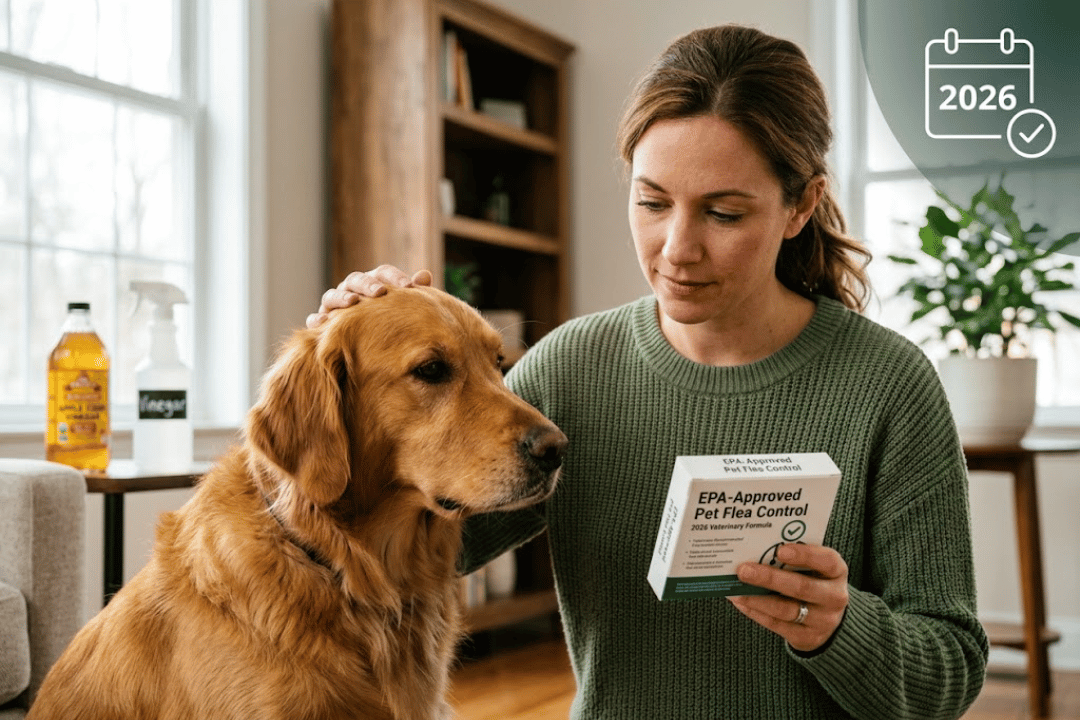
If you are wondering will vinegar kill fleas, the dependable answer is no. White vinegar and apple cider vinegar are not proven flea killers. They also cannot replace proper treatment for pets or your home.
Direct answer: Vinegar does not reliably kill fleas or control an infestation. Its strong smell may discourage some fleas for a short period. However, veterinary sources do not recommend it as an effective treatment. A successful plan treats pets while removing fleas, eggs, and larvae from the home.
Fleas and Vinegar at a Glance
| Question | What U.S. pet owners should know |
|---|---|
| Does vinegar kill adult fleas? | No reliable evidence shows household vinegar kills fleas effectively. |
| Does it kill flea eggs? | No. Vinegar does not provide dependable egg control. |
| Can it repel fleas? | Any effect appears limited and unreliable. |
| Is it safe on pets? | It can irritate sensitive or damaged skin. |
| What works better? | Veterinary-recommended flea prevention plus environmental cleaning. |
| Best first home step | Vacuum frequently, especially where pets rest. |
| Important safety rule | Never use a dog-only flea product on a cat. |
Key Takeaways
- Household vinegar is not a dependable flea treatment.
- Spraying it on an irritated pet may make skin discomfort worse.
- Effective control requires treating the animal and its surroundings.
- Vacuuming, washing bedding, and flea combing help reduce household populations.
- Use flea products only for the species, age, and weight shown on the label.
- Ask a veterinarian which preventive product fits your pet.
Will Vinegar Kill Fleas on Dogs, Cats, or in the Home?
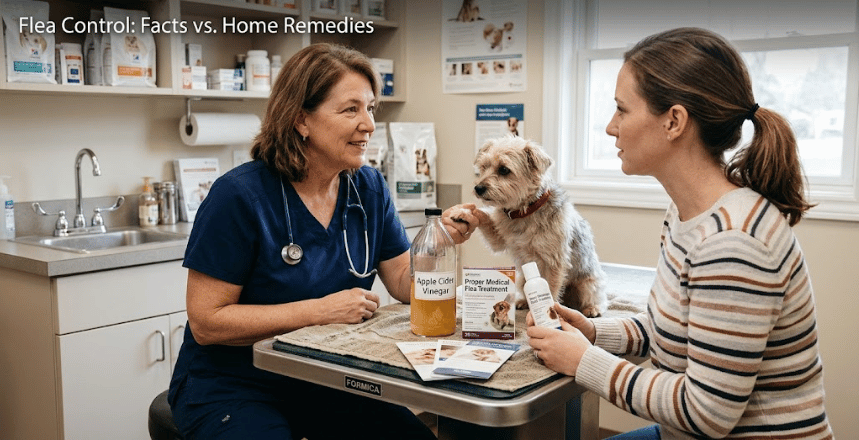
Household vinegar is acidic, which makes it sound useful against parasites. But acidity alone doesn’t make something an effective flea treatment. Current veterinary guidance says apple cider vinegar does not kill fleas.
Little scientific evidence also supports using it as a flea repellent. A strong smell may briefly discourage some pests. That temporary effect does not interrupt a household infestation or replace tested prevention.
This distinction matters because fleas do not live only on your pet. Eggs and immature stages can remain in carpeting, bedding, furniture, and floor gaps. Treating only the animal leaves much of the problem untouched.
Why Vinegar Seems Like It Should Work
The idea is appealing because vinegar is inexpensive and already found in many kitchens. Its strong smell and acidity can affect certain household materials. Those qualities make many homemade flea recipes sound reasonable.
Fleas are harder to manage because their life cycle extends beyond visible adults. A remedy that annoys an adult flea is not enough. It must also fit into a plan that prevents new adults from emerging.
Online recipes may therefore create false confidence during an active infestation. Owners may delay an effective treatment while fleas continue reproducing. Veterinary-reviewed sources instead recommend products designed and tested for flea control.
Can Vinegar Harm a Dog or Cat?
Apple cider vinegar is not considered an effective flea medicine for dogs or cats. Applying it to damaged or inflamed skin can cause irritation. Flea bites and scratching can already leave the skin sensitive.
Pets may also lick anything placed on their coat. PetMD notes that ingesting apple cider vinegar can cause stomach problems. Forcing an animal to drink it is not recommended.
Cats deserve extra caution with homemade pest remedies. Products safe for one species are not automatically safe for another. The EPA specifically warns against applying dog flea products to cats.
For more cat-focused household safety information, see WriteOrTell’s pet-safety coverage of baby’s breath and cats. Baby’s Breath and Cats safety guide You can also browse the site’s broader pet-care coverage. WriteOrTell Pets section
What Actually Works Against Fleas?
Effective control starts with a product suitable for the animal being treated. Flea products include topical treatments, collars, shampoos, sprays, and other options. A veterinarian can help you choose based on your pet’s health and circumstances.
The product label matters as much as the product itself. Use only the amount intended for your pet’s species and weight. Check minimum-age rules before treating puppies or kittens.
Household cleaning must happen alongside pet treatment. Fleas can remain in areas where pets sleep or spend time. Ignoring those areas often allows the problem to continue.
A 7-Step Flea-Control Plan for Your Pet and Home
1. Choose the Right Treatment for Each Pet
Speak with your veterinarian about an appropriate flea product. Consider species, age, weight, health, and other medications. Never assume one animal’s treatment can be shared with another.
2. Follow the Label Exactly
Read every warning before applying a flea product. Use only the dose intended for that animal. Keep the packaging in case a reaction occurs.
3. Use a Flea Comb
A flea comb can remove adult fleas and flea dirt from the coat. Concentrate around the neck and tail areas. The EPA’s flea-control guidance recommends placing removed fleas into hot, soapy water.
4. Vacuum Flea-Prone Areas Frequently
Vacuum carpeting, upholstered furniture, floor edges, and other areas your pet uses. The EPA recommends daily vacuuming during initial flea control. Vacuuming helps remove adults and developing stages from the environment.
5. Wash Pet Bedding
Clean pet bedding and washable fabrics using hot, soapy water. Pay special attention to places where animals regularly sleep. Severe infestations may require replacing heavily affected bedding.
6. Consider Steam Cleaning
Steam can help treat carpeting where flea stages remain hidden. The EPA notes that hot steam and soap can kill fleas at multiple stages. Focus on rooms and surfaces where pets spend the most time.
7. Keep Prevention Consistent
Flea control often fails when treatment stops after visible adults disappear. Follow your veterinarian’s prevention schedule rather than relying on occasional home remedies. Seek professional pest-control advice if a serious household infestation continues.
What About Vinegar on Carpets or Furniture?
Vinegar on household surfaces may help with routine cleaning. That does not make it a proven pesticide. Don’t rely on a household spray to clear an established infestation.
Vacuuming is a better-supported first step for household flea control. Steam cleaning can add another layer where appropriate. Washing fabrics also reduces flea-friendly areas around your pet.
If you use any pesticide indoors, check its label first. The EPA recommends registered products and careful adherence to directions. Avoid unregistered products that make unsupported pest-control claims.
How Do You Know Your Pet Has Fleas?
Frequent scratching can be an early clue, but it is not specific to fleas. You may also notice small dark specks in the coat. These specks can be flea dirt, which contains digested blood.
A flea comb can make inspection easier. Check areas around the tail, neck, belly, and other warm locations. Visible adult fleas confirm that treatment should include both the pet and its environment.
Persistent itching deserves veterinary attention even after flea treatment begins. Other skin problems can resemble flea irritation. Your veterinarian can determine whether allergies, infection, or another condition needs treatment.
When Should You Contact a Veterinarian?
Call your veterinarian when your pet has heavy scratching, damaged skin, or unusual behavior. Young, small, sick, or older animals may need additional care. A professional can also recommend a preventive that fits the animal.
Seek advice promptly if your pet reacts to a flea product. The EPA recommends removing a flea collar after a suspected reaction. It also advises washing topical products off with mild soap when appropriate.
If your pet’s health concern extends beyond fleas, WriteOrTell also maintains broader wellness information. WriteOrTell Health section Online information can help you prepare questions, but it cannot diagnose an individual animal.
The Bottom Line
Vinegar is attractive because it is cheap, familiar, and easy to find. Those advantages do not make it an effective flea treatment. Current veterinary guidance favors tested flea products and environmental cleaning instead.
Treating the pet alone may also leave immature flea stages inside the home. Combine suitable prevention with vacuuming, bedding care, and other environmental steps. That approach addresses the infestation instead of masking it.
For U.S. pet owners, the safest starting point is simple. Ask your veterinarian which treatment matches your animal. Then follow EPA-backed cleaning and product-safety practices around the home.
Frequently Asked Questions
Will vinegar kill fleas if I spray it on carpets?
No reliable evidence shows that a household vinegar spray can eliminate a flea infestation. It also does not replace vacuuming or proper treatment. Use proven environmental control methods instead.
Does apple cider vinegar kill flea eggs?
Apple cider vinegar is not a dependable way to kill flea eggs. Eggs and immature stages can remain throughout the home. Cleaning and an appropriate flea-control program address the problem more effectively.
Does vinegar repel fleas?
Evidence for reliable repellency is weak. The odor may temporarily discourage some fleas. That short effect should not be treated as prevention.
Can I spray apple cider vinegar directly on my dog?
Veterinary sources do not recommend it as an effective flea treatment. It can irritate already sensitive skin. Ask your veterinarian for a tested product instead.
Can I put vinegar on my cat for fleas?
Do not rely on it for feline flea control. Cats need products specifically labeled or prescribed for cats. Never apply dog-only flea medication to a cat.
What kills fleas in the house?
Frequent vacuuming, hot washing, flea combing, and steam cleaning can reduce fleas at home. Treat your pet at the same time. Severe infestations may also need professional pest control.
Why do fleas return after treatment?
Developing flea stages may remain in carpets, bedding, furniture, and other protected areas. Visible adults are only part of the household problem. Continued prevention and environmental cleaning help break that cycle.