
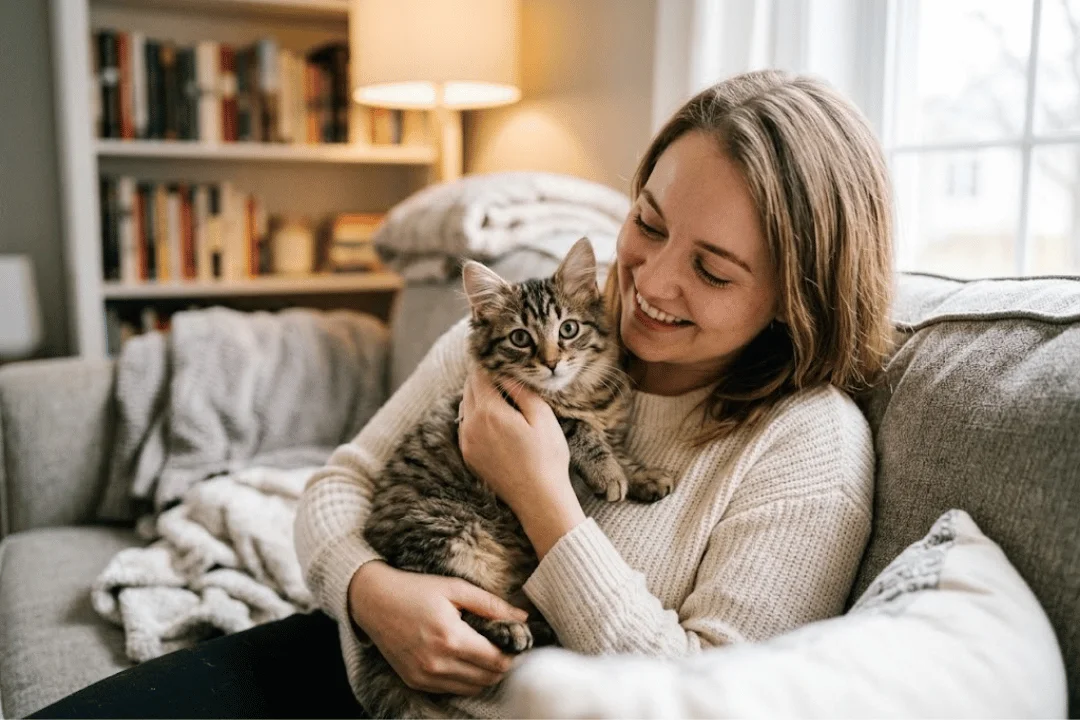
Why are cats so cute to so many people? The answer starts with biology, but it does not end there. Appearance, sound, movement, and social bonding all shape the reaction we call cuteness. Elsewhere on the site: What is OPS in Baseball.
Quick answer: Humans often find felines cute because their faces carry baby-like cues, including large eyes, small noses, and round heads. Soft fur, playful movement, purrs, meows, and friendly social signals add more appeal. Familiarity and bonding can make one particular pet seem even cuter over time.
Key facts at a glance
| Layer | What research suggests | Why it can feel cute |
|---|---|---|
| Face | Baby-schema traits include large eyes, rounded contours, and a small nose. | Juvenile proportions can attract attention and caregiving responses. |
| Touch | Soft fur and compact proportions add sensory appeal. | Texture and size can make interaction feel gentle and comforting. |
| Sound | Purrs and domestic meows can strongly affect human listeners. | Vocal cues make the interaction more emotionally noticeable. |
| Interaction | Slow blinks and attachment behaviors support social connection. | Positive exchanges make appeal feel personal rather than purely visual. |
| Familiarity | Repeated contact adds memories and individual preference. | Bonding can make one companion seem cuter than another. |
TL;DR
- Baby-like facial proportions provide the strongest scientific starting point for feline cuteness.
- Kittens intensify those proportions through large-looking eyes, small faces, and dependent behavior.
- Purrs, meows, slow blinks, play, and touch add sound, movement, and social reward.
- Domestication may have increased some juvenile facial traits, but intentional selection for cuteness remains unproven.
Why Are Cats So Cute? The Short Scientific Answer
Researchers studying baby schema find that infant-like facial configurations can raise cuteness ratings in human and animal faces. Large eyes, a short nose, and rounded features resemble cues associated with young offspring. Those cues can draw attention before we consciously decide what looks appealing.
That does not mean everyone responds the same way. Culture, experience, and personal preference still shape which face feels most appealing. Baby schema offers a strong biological starting point, not a complete explanation.
1. Baby-like facial proportions trigger attention
Baby schema, or Kindchenschema, describes features that resemble those of a young infant. Common examples include large eyes, a high forehead, and a small nose. Human brains tend to notice those proportions quickly and often rate them as appealing.
A 2022 facial morphology study compared owned domestic felines with feral and wild relatives across 3,295 photographs. Owned domestic animals showed more juvenile facial features, including shorter noses. Shorter noses also received higher cuteness ratings, though the study did not prove intentional selection for cuteness.
2. Kittens intensify the same visual cues
Kittens amplify those cues because their proportions are more juvenile than an adult’s. Their eyes look large relative to their face, while the muzzle remains compact. Small bodies and less coordinated movement can also signal vulnerability and dependence.
As they mature, many facial proportions lengthen or sharpen, yet some juvenile features remain. That retained youthfulness is often called neoteny. It helps explain why an adult pet can still trigger a similar protective response.
3. Soft fur and compact bodies add another sensory layer
Visual cues are only one layer. Soft fur adds a tactile reward, while a compact body can make handling feel gentle and safe. This sensory idea is plausible, but facial-cuteness research is stronger than direct evidence about fur.
Movement matters too. A quick pounce, kneading paws, or a sudden sideways hop adds unpredictability without much threat. That contrast between skilled hunting behavior and playful clumsiness can feel especially endearing.
4. Purrs and meows make the appeal multisensory
Sound changes the experience before you even touch the animal. A 2009 study found a special solicitation purr used around feeding requests. Listeners rated those purrs as more urgent because they included a higher-frequency, cry-like component.
Domestic meows also differ from African wildcat vocalizations. In a 2004 study, people rated domestic meows as considerably more pleasant than wildcat calls. That finding suggests domestication may have favored signals that work better around human listeners.
5. Slow blinks and affection create a social feedback loop
Facial expressions can strengthen the bond after first impressions. In experiments, felines narrowed their eyes more after people used a slow-blink sequence. They were also more likely to approach an unfamiliar experimenter after that signal.
Those interactions create a social feedback loop around cuteness. A pet looks appealing, you respond warmly, and the animal learns that your attention has value. Repeated positive exchanges can turn a general preference into affection for one individual.
Research also suggests domestic felines can form distinct attachment patterns toward caregivers. That does not mean they experience relationships exactly like humans. It does show that the bond has measurable behavioral structure, rather than being simple projection.
6. Did domestication make the domestic cat cuter?
A 2022 study offers evidence that ownership and domestication correlate with more juvenile facial shapes. Owned domestic felines showed shorter noses and lower eye angles than wild and feral groups. Those changes can make the face look younger and, in some cases, cuter.
The authors did not find those features linked to years spent with a current owner. They suggested a transgenerational effect was more plausible than changes during one animal’s lifetime. That distinction matters because association does not prove humans deliberately selected cuteness.
7. Familiarity makes cuteness personal
Your brain does not judge every pet from a blank slate. Familiarity can make small traits, such as a crooked whisker or odd sleeping pose, emotionally meaningful. Attachment then layers personal history onto general visual appeal.
This helps explain why one owner sees their pet as uniquely adorable. Scientific studies can describe broad tendencies, but they cannot rank an individual companion’s charm. Personal experience supplies the part no facial measurement can capture.
If you enjoy learning how appearance and behavior affect pet care, explore the WriteOrTell Pets section. The site also covers practical household safety in its baby’s breath safety guide. These resources pair curiosity about feline behavior with everyday care decisions.
Pet appeal also crosses into home and daily routines. The WriteOrTell Lifestyle section can support broader topics around living with animals. Keeping those subjects connected helps readers move from curiosity to practical choices.
Why sleeping felines can look extra adorable
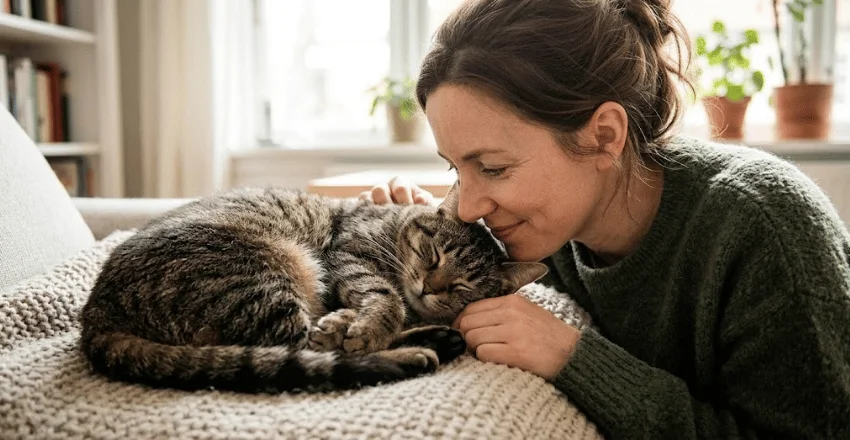
Sleep often compresses the body into rounder, softer shapes. Closed eyes, tucked paws, and slower movement can also reduce signs of threat. Those cues may reinforce the same youthfulness and safety signals behind baby-schema responses.
Direct experiments on sleeping cuteness are limited, so this part is best treated as interpretation. The effect probably combines posture, stillness, familiarity, and context. A pet curled in a trusted place also signals comfort, which owners often value.
Do cats know they are cute?
There is no strong evidence that a feline understands the abstract human category called cute. Learning is a simpler explanation for many attention-seeking behaviors. If a meow, head tilt, or paw tap earns food or affection, the behavior can become more frequent.
The solicitation-purr research fits that learning-based view. An animal can discover which signals change human behavior without understanding why humans find them adorable. Effective charm does not require a self-aware plan.
Frequently Asked Questions
Why are cats so cute?
They combine baby-like facial cues with pleasant sounds, soft textures, playful movement, and social feedback. Those features activate attention and caregiving tendencies, while bonding adds personal meaning. Biology explains the baseline, and experience explains why one pet can feel uniquely adorable.
Why are kittens often cuter than adults?
Kittens display stronger juvenile proportions, including relatively large eyes and smaller facial features. Their small size and less coordinated movement can signal dependence. Those cues often intensify the caregiving response linked to baby schema.
Do cats know when humans find them adorable?
Evidence does not show that a feline understands cute as a human concept. It can still learn that certain sounds or gestures produce attention. That learned response may look strategic without requiring an abstract idea of cuteness.
Did humans breed cats to look cute?
Some modern breeds were intentionally selected for specific looks. Species-wide domestication is more complicated and developed over many generations. Research links ownership with more juvenile facial traits, but it does not prove cuteness was the only selection pressure.
Do purrs make a cat seem cuter?
Purring can strengthen the emotional experience because it adds sound and closeness to visual appeal. One study showed feeding-related purrs contain a cry-like component that people notice as urgent. That result explains responsiveness better than cuteness itself, so the distinction matters.
The reason feline cuteness feels so powerful
Feline cuteness works in layers. Baby-like proportions grab attention, sounds invite response, and behavior creates repeated moments of social reward. Bonding then personalizes those signals until one animal can feel impossible to resist.
The best explanation is not a single feature. It is the combination of face, touch, sound, movement, and relationship. That combination helps explain why the reaction feels immediate yet grows stronger with familiarity.
Want more pet-focused reading after this science explainer? Browse WriteOrTell’s Pets section and related lifestyle coverage for practical, reader-friendly guides. Curiosity is more useful when it leads to safer, better-informed care.