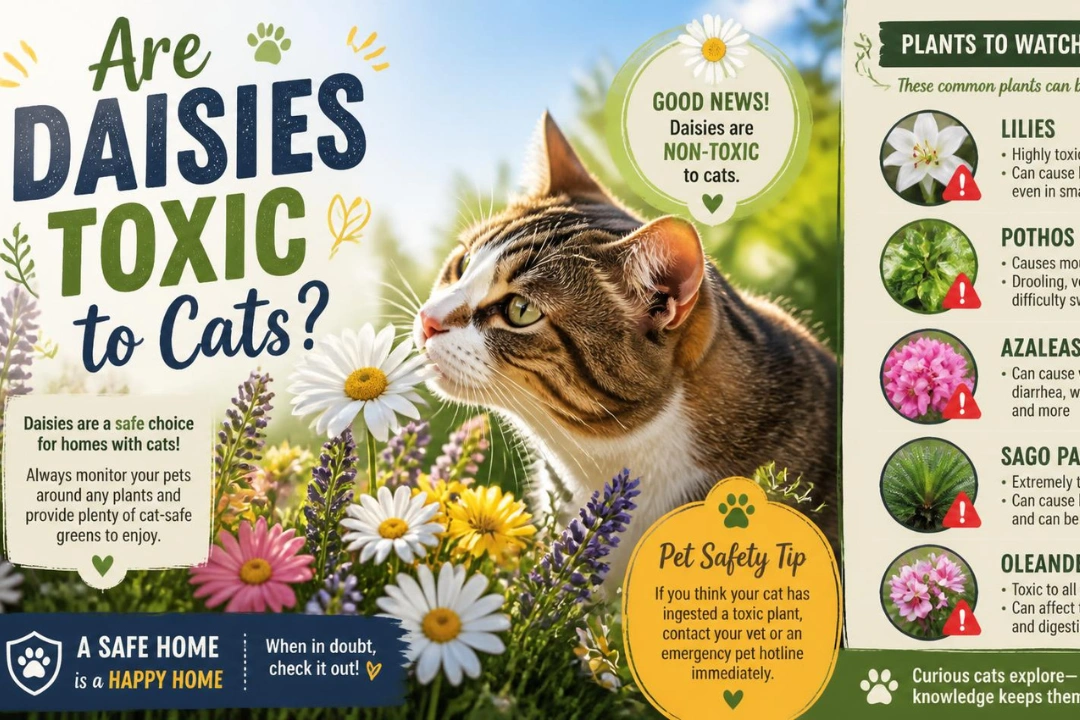
Are daisies toxic to cats? The answer depends on the exact plant behind the common name. Some daisy-type flowers are toxic, while several well-known varieties are listed as non-toxic.
The ASPCA entry called “Daisy” refers to Chrysanthemum species, which it lists as toxic to cats. Signs can include vomiting, diarrhea, drooling, poor coordination, and skin irritation. Gerbera jamesonii, often sold as Gerbera or African daisy, is listed as non-toxic. Identify unknown flowers before your cat has access.
| Flower name | Scientific name | ASPCA status for cats | Main point |
| Daisy, mum, chrysanthemum | Chrysanthemum species | Toxic | Can cause digestive, neurologic, and skin signs |
| Gerbera daisy | Gerbera jamesonii | Non-toxic | Still not intended as cat food |
| Poison daisy or mayweed | Anthemis cotula | Toxic | Can cause digestive signs and dermatitis |
| Easter daisy | Townsendia sericea | Non-toxic | ASPCA lists it as non-toxic |
| Blue-eyed daisy | Arctotis stoechadifolia | Non-toxic | ASPCA lists it as non-toxic |
The classifications above come from current ASPCA plant entries. Their database shows why checking the scientific name matters more than relying on appearance.
Why the Name “Daisy” Causes So Much Confusion
The word daisy describes many flowers that look similar but are not the same plant. A garden tag may use a common name without giving enough safety information. For cat owners, the scientific name is the most useful detail to check.
The ASPCA page titled “Daisy” refers specifically to Chrysanthemum species, which it classifies as toxic to cats. The same database lists Gerbera jamesonii as non-toxic to cats. This difference is why a simple yes-or-no answer can mislead pet owners.
Are Daisies Toxic to Cats?
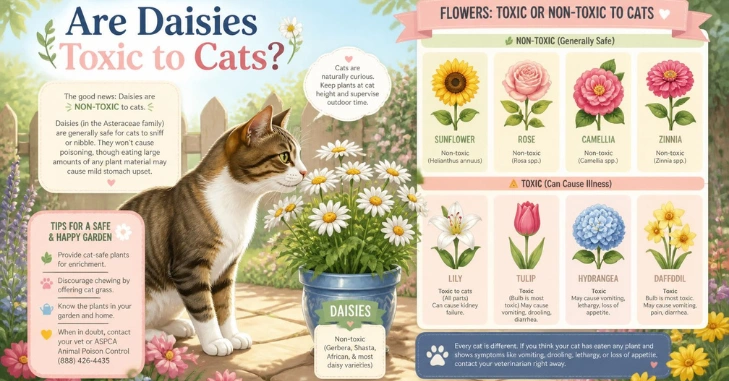
Chrysanthemum-type flowers are the main concern when a label says “daisy,” “mum,” or “chrysanthemum.” The ASPCA lists sesquiterpenes, lactones, pyrethrins, and other irritants as toxic principles. Pet Poison Helpline says eating chrysanthemum plant material usually causes gastrointestinal upset.
Are Daisies Toxic to Cats? Other plants with daisy in their common name may be safer. The ASPCA lists Gerbera, Easter, and blue-eyed varieties as non-toxic to cats. Keep an unknown bouquet away from your pet until you identify every stem.
What Symptoms Can a Toxic Flower Cause?
A cat that eats Chrysanthemum species may develop vomiting, diarrhea, drooling, poor coordination, or skin irritation. These signs match the ASPCA’s current plant entry for this group. The amount eaten and the individual cat can affect how severe an exposure becomes.
Poison daisy, also called mayweed, has a different scientific name and a separate ASPCA warning. Reported signs include dermatitis, vomiting, diarrhea, poor appetite, and allergic reactions. Any worsening symptoms deserve prompt veterinary guidance, especially when the plant is uncertain.
What to Do if Your Cat Ate a Daisy
Start by removing the plant and preventing another bite. Keep the flower, package, receipt, or a clear photo for identification. Do not try to make your cat vomit unless a veterinary professional gtells you to
- Move the bouquet or plant completely out of reach.
- Check the label for the scientific name, not only the common name.
- Look for drooling, vomiting, diarrhea, weakness, wobbliness, or unusual behavior.
- Call your veterinarian if the plant is toxic, unknown, or your cat has symptoms.
- In the United States, ASPCA Animal Poison Control is 888-426-4435, and Pet Poison Helpline is 855-764-7661.
Cornell University’s Feline Health Center reports that the ASPCA’s Animal Poison Control Center handles well over 100,000 calls a year about substances that may poison household pets. Cornell advises owners to call a veterinarian after a suspected toxic exposure, and not to induce vomiting unless a professional specifically directs it. A sample or plant label can help a veterinary team identify the risk faster.
Gerbera Flowers Are a Safer Daisy-Like Choice
Gerbera jamesonii is one of the clearest safer choices for cat households. The ASPCA lists it as non-toxic to cats, dogs, and horses. PetMD also includes Gerbera flowers among its cat-safe flower options. Also worth reading: Why Are Cats So Cute.
Non-toxic does not mean a cat should eat the plant freely. PetMD notes that plant material can still cause stomach upset after chewing. Keep arrangements out of reach if your cat likes to bite leaves, stems, or petals.
Do Not Compare Daisy Exposure With Lily Exposure
A risky daisy exposure is not the same as exposure to a true lily. The U.S. Food and Drug AdministratUSwarns that every part of a true lily or daylily is toxic to cats, including the pollen and the water in the vase. The FDA reports that early signs such as drooling and vomiting begin 0 to 12 hours after ingestion, with signs of kidney damage following about 12 to 24 hours after. Untreated, that kidney damage can be fatal.
This matters with mixed bouquets because one harmless-looking arrangement can contain several species. Check every stem before placing flowers where a cat can reach them. WriteOrTell’s baby’s breath safety guide also explains why the whole bouquet matters.
How to Make Flowers Safer Around Cats
Prevention starts before a bouquet enters your home. Ask the florist for scientific names when a plant has an unclear common label. Keep unknown flowers in a closed room until you confirm their status.
Choose known cat-friendly options when possible, then prevent chewing anyway. Gerbera flowers, roses, orchids, snapdragons, and sunflowers appear in current cat-safe flower guidance. You can also browse WriteOrTell’s Pets section for related pet-safety topics.
The Bottom Line for Cat Owners
Do not treat every flower called a daisy as equally safe or equally dangerous. Check the scientific name, then use a veterinary plant database to confirm the risk. If you’re unsure, keep the plant away from your cat and seek professional advice.
Fast identification and sensible prevention make flower-related scares much easier to handle. Keep a written list of the plants in your home, and confirm any new flower before it reaches a shelf your cat can climb.
Frequently Asked Questions
Are daisies toxic to cats?
Some are, but the common name covers different plants. ASPCA classifies Chrysanthemum species sold as daisy or mum as toxic to cats. Gerbera jamesonii and several other daisy-named plants are listed as non-toxic.
What happens if a cat eats a toxic daisy?
Possible signs include vomiting, diarrhea, drooling, poor coordination, and skin irritation. Some toxic species can produce different symptoms, so correct identification matters. Contact a veterinarian when the plant is unknown, or symptoms appear.
Are Gerbera daisies safe for cats?
The ASPCA lists Gerbera jamesonii as non-toxic to cats. A small bite is not expected to cause the same toxicity as Chrysanthemum species. Still, eating plant material can upset a cat’s stomach.
Should I call a veterinarian after a small bite?
Call for guidance when the plant is toxic, unidentified, or your cat shows symptoms. A veterinarian can weigh the plant type, the amount, the timing, and your cat’s condition. Poison-control services can also give exposure-specific advice to US owners.